What Do You Do When You’re Allergic to Everyone?
goodtrickstep >> APPEARANCE>>FITNESS>>HEALTHY-NUTRITION>> What Do You Do When You’re Allergic to Everyone?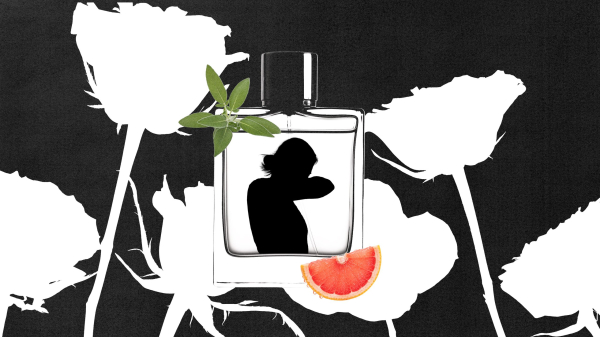
What Do You Do When You’re Allergic to Everyone?
 Collage: Briana Rengifo; Source images: Getty ImagesSave this storySave this story
That night in March of 2021 was a typical one for Cami Oresky, then a senior at the University of Miami. She was engaging in one of girlhood's most beloved rituals—that is, she was getting ready to go out with her friends. As usual, she applied her skin care and makeup, styled her hair, and put on a cute going-out top. Also as usual, she spritzed on her perfume. But this time, something unusual happened. Her eyes began to burn and swell.
Oresky, now 26, says the year that followed was an incredibly disorienting period of her life. "I just kept getting more and more sick,” she says. “I obviously didn't know what I was allergic to, so I continued to wear perfume every day, and my shampoo and conditioner were fragranced, and I had a plug-in in my apartment…." Getting her official diagnosis—more on that in a moment—took trial and error and endless appointments with doctors who didn't understand what was happening to her or, in some cases, didn't believe that anything really was. "I went to a doctor because my eyes were so swollen, and his response to me was that I was just aging, and that's why I had such bad bags under my eyes," says Oresky. At the time, she was 21 years old.
Today, fragrance is just as popular as it’s ever been, if not more so. According to Google Trends, searches for "perfume" have steadily increased (with predictable spikes every December thanks to holiday shopping) since about May of 2020. The popularity of the term reached an all-time high in December of 2025, with searches more than double that of December 2020. As of this writing, there are 1.7 million posts labeled #PerfumeTok on TikTok. And according to a report from Grand View Research, a market research and consulting firm, the overall perfume market was valued at 59.85 billion in 2025; that number is projected to grow to 78.85 billion by 2030.
Allison Collins, co-founder and managing director of advisory firm The Consumer Collective, confirmed that the perfume boom is full steam ahead and pinpointed the very start of it as far back as 2016. “It was slow to bloom, if you will,” she says. “The American market is not historically the most advanced or sophisticated fragrance market globally, but in 2016 we started to see more interest.” Collins says that’s when indie perfumes started to come onto the scene and larger cosmetics brands began to acquire niche fragrance houses. But things really got going in the early years of COVID, when lockdown and social distancing measures were in place. “That’s when we started to see how consumers engage with fragrance shift a little bit,” says Collins. “Fragrance is the most emotional of all the [beauty] categories; it has these limitless world-building capabilities, mentally, for someone. Coming out of the pandemic it was as if people were like, ‘I want to live.’”
Perfume has always been popular, but there are two things that Collins says distinguish this era’s perfume boom from any other. The first is connoisseurship; because of social media, the average perfume user is way more informed about fragrance. Filed under #PerfumeTok are hyper-detailed videos about the origins of orris and a ranking of the greatest musk scents of all time. “The most meaningful shift that I saw last year was actually people who definitely don’t know that much about fragrance doing their ‘get ready with me’ and talking about fragrance as part of their routine,” says Collins. The other distinguishing factor is cross-category growth. In other words, brands are putting fragrance in products they never used to put it in because consumers are seeking fragrance in all parts of their lives. “They’re finding new ways to incorporate fragrances throughout their day,” says Collins. See: solid perfumes, hair mists, and luxury laundry detergents.
But not everyone is eager to live in a perpetually-fragranced world. A 2019 study out of the University of Melbourne found that across four countries (the U.S., Australia, the U.K., and Sweden), 32.2 percent of adults self-reported some form of fragrance sensitivity. Which means that for some people, the omnipresence of perfumes has presented enhanced challenges in an already difficult situation. I spoke to people with fragrance allergies diagnosed through patch-testing, as well as folks with fragrance sensitivities and reactivities resulting primarily from two complex, still-emergent conditions: MCAS (mast cell activation syndrome) and MCS (multiple chemical sensitivity). Their experiences vary from mildly inconvenient to seriously life-threatening, and they all mitigate their symptoms in different ways—but they all agree that the perfume boom has meant it's harder than ever to avoid fragrance.
What defines a fragrance allergy
"If we talk about having a fragrance allergy, for the vast majority of cases, we're talking about allergic contact dermatitis," says Songhui Ma, MD, a board-certified allergist and immunologist and assistant clinical professor at Mount Sinai Hospital in New York City. Think of a poison ivy rash, the most commonly known example of contact dermatitis: the skin is red, itchy, swollen, and flaking. Severe cases might even include blistering. Contact dermatitis can be caused by a multitude of substances; according to a study conducted at the University of Wisconsin in 2020, fragrance allergies account for between five and 11 percent of contact dermatitis cases, while between .7 and 2.6 percent of the general population has been formally diagnosed with a fragrance allergy.
For cases of potential allergic contact dermatitis, there's a fairly straightforward and widely accepted diagnostic protocol called patch testing, usually performed by an allergist, immunologist, or dermatologist. "We affix big strips of tape with different chemicals on them to a patient’s the back," says Dr. Ma. "We test for the most common allergens." When it comes to fragrance, a typical patch test includes fragrance mix 1, a blend of eight fragrance chemicals; fragrance mix 2, a blend of six; and Balsam of Peru, a particularly prevalent fragrance allergen. "I like to think of it as the way we interrogate the skin's immune system," says Emily Milam, MD, a board-certified dermatologist at NYU Langone who specializes in skin allergies. In addition to fragrance, the sticky strips include things like preservatives, textile dyes, metals, and more. They're left on for 48 hours, then removed. "We draw a grid on the back with a marker to keep track of where we placed everything, and then we all go home, and then we return at the end of the week, and we look to see which squares have developed a rash that signifies that those ingredients could be a problem," explains Dr. Milam.
After patch-testing with her allergist, Oresky now knows that she's allergic to Balsam of Peru, fragrance mix 1, and fragrance mix 2. But her symptoms go far beyond contact dermatitis; she's affected by airborne exposure to fragrance, which can result in not just burning, swollen eyes but also an itchy throat, hives, physical exhaustion, and migraines that can last for days. "At first, my reactions were mild," says Oresky. "My eyes would just be dry and sting a little bit when I smelled strong scents, but it's gotten progressively worse. Every reaction I have seems to last longer and be more severe."
When we breathe in chemicals, whatever they may be, they interact with a system in the nose called the olfactory epithelium; it contains sensory neurons similar to the ones in our brains, and those neurons contain odor receptors. "You can think of these odor receptors like locks, and you can think of the chemicals you sniff in as keys," explains Sandeep Robert Datta, MD, a professor of neurobiology at Harvard Medical School who runs the Datta Lab, a research department devoted to studying the relationship between the olfactory system—the biological equipment that allows us to smell—and the rest of our bodies, particularly our brains. "Depending on which ‘keys’ or chemicals are present, some of the ‘locks,’ the receptors, are going to get turned on, and then the neurons are going to get turned on." From there, an electrical signal is created that travels to the brain.
Which brings us to Oresky's other diagnoses: MCS (multiple chemical sensitivity) and MCAS (mast cell activation syndrome). For reasons we don’t yet fully understand, people with MCS and MCAS seem to have “locks” that set off the body’s fire alarm when “keys” that fall into the fragrance category are inserted. Both conditions are relatively under-researched, and our understanding of them continues to evolve, but they are increasingly classified as disabilities; a 2016 lawsuit solidified fragrance sensitivity as a disability under the Americans with Disabilities Act, and in Canada, MCS is considered a disability under the Canadian Human Rights Act and the Accessible Canada Act. And both, particularly MCS, can result in reactions to fragrance with varying degrees of severity.
"I can't do anything without planning ahead."
"[The perception of] MCS is like MS was fifty years ago—it's been so hard to get some credibility and belief," says Shelley Petit, chair of the New Brunswick Coalition of Persons with Disabilities (NBCPD) and a former teacher. "I get it. If I didn't have MCS, I'd be like, ‘They're nuts,’ right? It's a hard disease and disability to understand." Petit believes it was long-term exposure to mold in the classroom where she taught that triggered her MCS. It started, she says, with mild symptoms, usually just a headache. But over the years, her reactions to fragrances progressed. "I started having problems breathing," she says. After a while, she started tasting fragrances before she could smell them; her students knew that if she started to lick her lips, it was a sign she would soon have a reaction.
The cause of MCS is still not fully understood; often, people begin experiencing symptoms after a single event of severe chemical exposure (one 2000 joint study from the University of Iowa College of Medicine, the Iowa City Veterans Affairs Medical Center, and the Centers for Disease Control and Prevention in Atlanta suggested a connection between MCS symptoms and deployment in the Gulf War, for example). For others, like Petit, symptoms follow a period of long-term low-level exposure to a hazardous substance. Others report symptoms after an illness. While the exact causes are unclear, studies from 2021 and 2025 have found evidence of genetic markers for the condition, and a 2023 paper for Neuroscience & Biobehavioral Reviews notes that imaging studies found brain changes related to TRP receptors—essentially, sensory receptors—in MCS patients. The symptoms generally involve intense bodily reactions to low doses of common chemicals, usually including fragrances.
Petit's symptoms got worse over time as she continued teaching, eventually affecting her whole body and her mind. "I would often have to sit down on the floor. I would sound like I was drunk; I had to undergo multiple tests to prove that I was not drinking at work, that my coffee wasn't spiked, because I would lose my balance, my ability to speak, to make sense." It all came to a head on her school's Crazy Hair Day, when students came to class spritzed and styled with strongly-fragranced hair products. For the first time, Petit passed out, stopped breathing, and was taken out of the building by EMTs. After a week off, she tried to go back to teaching and kept getting sick. She was moved to another school, where she was placed next to the custodian's closet and across from the gym—two of the most highly-fragranced locations in the school (with notes of cleaning products and deodorant, respectively). "One day, I just stopped breathing and my heart stopped," she says. "The only reason I can talk to you today is that there was an ambulance on break across the street and they came running in, and they were able to start my heart again."
Petit's MCS has continued to progress since then, and these days she spends almost all her time in her home, where she and her husband use only unscented products and keep air purifiers running in every room. "Now, if I even want to leave my house, I have to wear a gas mask," she says. "That's what I have to wear, even to open my front door to let my cats in or out." Without a gas mask, exposure to fragrance can give Petit severe respiratory symptoms, pain, and balance issues. But she says that for her, the worst symptom of all is the brain fog and memory issues. "I've got a master's degree," she says. "I consider myself somewhat educated, and there are days that I struggle to pull out the names of my kids, or some really basic language. It is so frustrating." She attributes the severity of her illness to the time she spent grinning and bearing it. "If I knew twenty years ago what I know now, the lifestyle changes that I could have made probably would have kept me healthier for so much longer," says Petit. It's part of why she became involved with the NBCPD, and it's what motivates her to keep advocating for MCS awareness. "If my voice can make sure that future generations don't go through this or have a better chance of getting through it successfully, then I've served my purpose on the face of the earth."
Since being diagnosed, Oresky has cut all fragrance out of her home life—but she's not able to avoid it entirely. "I don't think people realize how much fragrance really is all around them at all times," she says. "I can't do anything without planning ahead." Now in law school in New York City, Oresky sometimes struggles to get to class; she lives a fifteen minute walk from the subway, and in icy weather, she can't just take a taxi or use a ride-sharing app, since cars tend to contain air fresheners. Her commute takes her through Grand Central Station, where Bath & Body Works scented the air as part of a holiday marketing campaign last year. And once she's in class, she has to sit apart from her perfume-wearing peers. "I've had to try and find a balance between isolating myself and living my life," she says. "I'm a very social person. I love to go out. I like to go to bars and restaurants and stores. I had to change my life completely." Now, when she decides to go out with friends, she has to factor in the three-day migraine that will follow.
Oresky also has MCAS, and although the acronyms are similar, their mechanisms of the two conditions differ immensely: MCAS, as opposed to MCS, is a condition in which mast cells, a subgroup of immune cells connected to allergic reactions like anaphylaxis, become "activated" and react to otherwise benign substances, according to a 2024 paper published in the World Journal of Clinical Pediatrics.
Bethany Harrup, 28, had some allergies growing up, but not severe ones. "When I went into high school and puberty hit me, it's like shit hit the fan and everything went downhill from there,' she says. One morning, she went into anaphylaxis after eating a bowl of cereal and was eventually diagnosed with such a broad range of food allergies that for a time, she had to eat through a feeding tube. It was during this time she realized that smells were making her sick, too. "It spiraled to the point that I was going into anaphylaxis when exposed to strong scents, and that's when things got even more difficult," she says. "It was crazy. I was using around twenty EpiPens a month on top of doing IV medications at home." It turned out that in addition to her patch-tested allergies, she also had MCAS.
After she was put on a selective immunosuppressant drug called Xolair, Harrup's symptoms finally started to improve, and she regained the ability to eat in small amounts. But her scent allergies remained and are still severe to this day. "I tell people I basically live in a bubble, because any sort of exposure to any strong scents, especially things like perfumes, makes me really reactive," she says. "The funny thing is, I'm on this medication that actually takes away my sense of smell. I can't smell pretty much anything, so you know it's not psychosomatic, because I'll start swelling out of nowhere and my husband will turn to me and be like, 'Yeah, that person in the line in front of you was wearing perfume.' And I was completely clueless about it.”
“It's really traumatizing,” says Harrup. “It gives me a lot of anxiety, so mostly I just stay home." When she does go out, she always wears a mask, which helps mitigate her symptoms temporarily. After ten to fifteen minutes of exposure, scents can permeate—but masking allows her to walk by a candle display in a grocery store without having a severe reaction.
The consequences of the perfume boom
Harrup says that on her rare outings, she has noticed fragrance becoming harder and harder to avoid, whether it's people around her wearing perfume, the clubhouse at her apartment complex using fragrance plug-ins, or her medical providers wearing fragrance to work. "I feel bad telling people not to wear perfume," she says. "I'm a military brat, so my dad was deployed a lot. When I was a kid, I would sleep with a shirt with some of the cologne he would wear. In high school, I used to do the same thing with my boyfriend's sweatshirt.”
“As much as I know fragrance means a lot to other people, it does to me, too,” Harrup continues. “I really miss enjoying scents.” Even more than missing the fragrances themselves, Harrup says, she misses her social life. Besides her friend Becca, who always showers with unscented products before coming over, few people in her life are willing to make the effort it takes to spend time with her. "I'm an extrovert, and I used to love crowds and concerts and going to dances," says Harrup. "Now, I get a panic attack if I go to a book club because I don't know what I'm going to be walking into, and I don't feel like I have the right to say anything about it there in the moment."
One alternative source of community has been Instagram. Harrup's page, @rebellious_story, is where she shares everything from health updates to book reviews. And she's not the only one. For Liv, 27, an esthetician known on Instagram as @chronicallyhillandhot, posting about her symptoms was actually what led to her MCAS diagnosis. While she says that in hindsight, there were signs of MCAS growing up, it wasn't until 2018 that she started to experience serious health issues. She was initially misdiagnosed with rheumatoid arthritis and fibromyalgia, and for a while, she controlled her symptoms by taking antihistamines. But by 2022, nothing was working anymore. "They had tried, it seemed like, everything, years prior," says Liv, who prefers not to share her full name. Her tonsils had been taken out; she'd had her esophagus stretched three times in a year. And still, her throat tightness persisted. That year, when her symptoms began to worsen again, she started to post about them. "I started my page as a combo of trying to joke and cope," she says.
Online, Liv posted about her mysterious symptoms and her visits to the ER, and as her following grew, the comments she started to receive often referenced MCAS. "I went back to my allergist. I asked about it, thinking it was a long shot or too rare, but it was as if a lightbulb went on in her eyes," she says. After being treated for suspected MCAS and referred to an immunologist, Liv experienced real relief for the first time. "The first time I met the immunologist, I felt so understood," she says. "Every seemingly crazy symptom I had ended up having real explanations. So my social media saw me, in real time, go from misdiagnosed and incredibly sick to properly diagnosed and, in many ways, better than I’ve been in years." Like Harrup, Liv always wears a mask in public. She has stopped using fragranced items on herself, and largely uses fragrance-free in her work as an esthetician.
When asking friends to wear unscented products, or trying to confirm a hotel doesn’t use fragrance in its lobby or rooms, Liv has often been met with skepticism. "I try to give people as much grace as possible," she says. "Places tend to take it as a joke or think you're being over the top, or that you're super holistic or into organic things, which is fine, but that's not the case." While medication has helped to greatly reduce the severity of her reactions, she still has to be careful; even hugging someone wearing a lot of perfume can result in throat itching, hives, or a rash.
Ana Bello-Elliott, 37, a user experience researcher, struggled with fragrance from a young age. As a child, she would immediately get a stuffy nose upon visiting relatives whose homes were scented with air freshening plugins, or after hugging a particularly "I've never really been able to wear perfume in the way other people do," she says. As she got older, her respiratory symptoms increased, and she eventually cut out fragrance completely. But it's increasingly harder to avoid; her apartment building recently began scenting the lobby, and she now takes a back entrance to avoid walking through it on her way home. She's also noticed that more brands scent their stores and even their products and packaging with various fragrances. "I know it's part of marketing; it's like a signature scent," she says. "But it's challenging, and it's imposing something on people that they may not necessarily want."
Since she switched to fragrance-free products, the minimal selection has been a consistent source of frustration for Bello-Elliott. "I always stop by the personal care section [of big box stores] and try to take pictures to show there's barely any fragrance-free stuff," she says. And what she does find on the shelves is often uninspiring. "A lot of the fragrance-free stuff that you do find on the shelves, it's really boring. It's an afterthought, or it's very clinical-looking. There's no intention." Last year, during one such visit to a store, she says she turned to her husband and made a decision: "I'm gonna start my own thing."
Better fragrance-free options
Currently, Bello-Elliott is building Kynd Alchemy, a brand of fragrance-free products that she hopes will feel special and intentional, but without the added fragrance. The first product is currently in development. "I want to start with body care first—some of the things that I personally have a very hard time finding," she says. She's working with a manufacturer and plans to launch by the summer. Her goal is to follow the EU's regulation principles, building a brand that customers can trust to be free of any potential irritants. She's also pursuing a diploma in personal care science. "I started doing the research and talking to manufacturers, and I wanted to be knowledgeable myself," she says.
Perry Romanowski and Valerie George, cosmetic chemists and co-hosts of The Beauty Brains podcast, both say that one of the main challenges for fragrance-free products is that they tend not to sell as well. "The reality is, people want to use fragranced products," says Romanowski. "That's why you still see most products do have fragrances in them, because that's what people buy." As cosmetic chemists, they don't often have much control over exactly what fragrances they use; a brand will simply send the fragrance mix, and it's up to them to formulate with it.
It is important to note, though, that fragrances are highly regulated. "Consumers should know that fragrance materials are some of the most studied materials for safety in the world," says George. "Anytime I get a fragrance in the lab, it comes with what's called an International Fragrance Regulatory Association (IFRA) statement, and they basically tell you how to safely use the product," she explains. "So if you're formulating a shampoo, your fragrance use level is very different than if you're formulating a baby product that's left on the skin, or an air freshener."
It's also important to distinguish the difference between "unscented" and "fragrance-free" products. If you're looking to avoid fragrance completely, don't reach for “unscented” products. "Unscented doesn't necessarily mean free of fragrance," says cosmetic chemist Ginger King.
"[Companies] can use other masking ingredients to cover up the base odor." This often happens when the smell of the product is too strong or unpleasant; added fragrance can help neutralize it. The final product might not smell like anything, but it might contain a fragrance allergen.
If you’re unsure if a product is unscented, fragrance-free, or loaded with perfume, there are tools you can use to scan a product and quickly check if any of its ingredients are potential irritants. Liv's medical providers recommended the app and website SkinSafe. Bello-Elliott uses Yuka, another scanning app, which she likes because it gives her the ability to delve deeper into ingredients and sources.
Other than improved labeling, two proposed changes that could help make the lives of people with fragrance allergies and sensitivities a little easier came up in nearly every conversation I had for this story: The first is for medical offices and providers, who are far more likely to be working with sensitive populations, to implement fragrance-free policies. "I've gone into anaphylaxis during surgery because the anesthetist was wearing cologne," says Harrup. Second, to keep scent out of public spaces. In fact, Oresky's mother, Maxine Silverman Oresky, a lawyer, is working to introduce legislation in the state of New York that would prevent businesses from doing just that. "That should be a personal choice," she says. "You want to put perfume on, you do you. I can choose to move away from you, but I shouldn't have to choose between doing anything because there's scent coming through the HVAC system."
The perfume pendulum may be swinging
Though as George confirmed, fragrance is one of the most highly regulated cosmetic chemicals, there's still a lot we don't fully understand about why even low concentrations of fragrance chemicals can cause such dangerous reactions in some people. As much as fragrance can bring us delight and pleasure, for people like Oresky, Petit, Harrup, and Liv, it can turn the whole world into one big, extreme-level game of "the floor is lava"—except instead of the floor, the lava is the literal air we breathe. As humans, we love fragrance and it's unlikely that the majority of people will give it up overnight. But it is an important accessibility accommodation that's often overlooked, and it should be a consideration when planning (or attending) large gatherings in enclosed spaces.
In the meantime, there’s some good news for the scent-sensitive: fragrances that stay closer to the vest may soon be trending, likely as a counterpoint to the over-the-top gourmands that have become synonymous with the perfume boom. Aveeno just released a Sensitive Skin Scents body care range with subtle fragrances formulated using only ingredients that passed internal irritation testing, while the brand Odele has launched natural hair and body mists meant to be enjoyed only by the wearer, leaving no telltale cloud of cough-inducing fragrance behind. While these products may not address more extreme sensitivities and allergies, they could indicate a move toward fragrance minimalism on the horizon.
Less fragrance would be a welcome change for journalist and communication studies researcher Aaron Goodman, Ph.D., who has MCS himself and has hosted The Chemical Sensitivity Podcast since 2022. Goodman says that more than anything, he hopes to encourage care and empathy. "Especially people we care about and our families; if someone says, 'Your laundry products or your sunscreen or your perfume is making me ill,' please believe them," he says. "Whether it's our colleagues or classmates, we want to treat people with respect and kindness."
Related Post

Oh God, There’s Something Called a “Collagen Cliff”
Collage: Allure; Source images: Getty ImagesSave StorySave this storySave StorySave this storyAnyone on the Internet…